
Start 2024 on the Right Financial Foot – Practical Steps for a Prosperous Year

Facebooktwitterlinkedinmail

As the new year unfolds, it’s an opportune time to reevaluate and revamp your financial strategies. Whether you’re aiming to build savings, invest wisely, or clear debts, at the beginning of the year a solid financial plan can set the stage for a prosperous future. Here are some practical steps to kick start your financial journey in 2024.

1. Reflect on the Past Year

Before diving into new financial goals, take a moment to reflect on the previous year. Analyze your spending habits, review your investments, and assess how well you adhered to your budget. Understanding where your money went and what financial choices worked or didn’t work for you will provide valuable insights for setting achievable goals in the coming year.

2. Set Clear and Attainable Goals

Establish specific and achievable financial objectives for 2024. Whether it’s saving for kids’ college education, paying off debts, better management for your personal and/or business cash flow, increasing retirement contributions, or starting a new investment venture, define your goals with clear timelines and measurable outcomes. This clarity will help you stay focused and motivated throughout the year.

3. Create or Update Your Budget

A budget serves as a roadmap for your financial journey. Take account of your 2024 income from all sources including your company stock options/employee stock purchase, and evaluate your expenses, and savings goals to create a realistic budget for the year ahead. Consider using budgeting apps or spreadsheets to track your spending and identify areas where you can cut back or reallocate funds toward your financial goals.

4. Prioritize Saving and Investing

Make saving a habit by automating contributions to your savings and investment accounts. Consider setting up automatic transfers from your paycheck to your savings or retirement accounts to ensure consistent progress toward your goals. Explore different investment options based on your risk tolerance and long-term objectives to make your money work for you.

5. Review and Optimize Your Investments

Take the time to review your investment portfolio. Assess the performance of your investments and consider rebalancing if necessary. Diversify your portfolio to spread risk and align it with your current financial goals and risk tolerance.

6. Tackle Debt Strategically

If you have outstanding debts, prioritize paying them off systematically. Consider using the snowball or avalanche method—paying off debts either from the smallest balance to the largest (snowball) or from the highest interest rate to the lowest (avalanche). Choose the method that suits your psychological and financial approach best.

7. Educate Yourself

Stay informed about financial matters. Whether it’s understanding investment strategies, learning about new savings options, or staying updated on tax implications, ongoing education is key to making informed financial decisions.

8. Review and Update Your Insurance Coverage

Ensure your insurance coverage—health, life, home, and auto—is adequate and up-to-date. Life changes and market fluctuations might require adjustments to your insurance policies to adequately protect yourself and your assets.

9. Seek Professional Advice

Consider consulting with a financial advisor or planner. Their expertise can provide personalized guidance, especially when navigating complex financial situations or planning for major life events.

10. Stay Committed and Flexible

Financial planning is an ongoing process. Stay committed to your goals, but remain flexible enough to adapt to unexpected changes or opportunities that may arise throughout the year.

Starting the year 2024 on the right financial footing involves a combination of diligence, planning, and adaptability. Remember, financial decisions you make today can have significant financial impact in the long run. By taking proactive steps and staying focused on your financial objectives, you can pave the way for a more secure and prosperous future.


What Is Special Needs Planning?

Facebooktwitterlinkedinmail

What is special needs planning? Different people have different definitions. We believe the goal and purpose of special needs planning is to assure individuals with physical, cognitive, or developmental impairment a place in the community appropriate to their capabilities, resources, and their needs.

Developing a Comprehensive Plan

Special needs planning is not just about creating legal documents. It’s about developing a comprehensive plan that takes into account all aspects of the individual’s life, including healthcare, education, employment, housing, and social activities, etc. The plan should encompass four elements: the life, resource, financial and legal plans. The plan should be flexible and adaptable to changing circumstances and should involve the input and involvement of the individual with disabilities and their caregivers.

Understanding Government Benefits

Individuals with disabilities may be eligible for government benefits such as Supplemental Security Income (SSI) and Medicaid. These benefits provide financial assistance and healthcare coverage, but they also have strict income and asset limits. Special needs planning takes into account these limits and helps to ensure that the individual does not lose eligibility for these benefits.

Creating a Special Needs Trust

A special needs trust is a legal tool that can be used to protect assets and ensure that the individual with disabilities continues to receive government benefits. Assets placed in a special needs trust can be used to pay for expenses not covered by government benefits, such as education, transportation, and recreational activities.

Planning for Caregiver Support

Caregivers play a critical role in the lives of individuals with disabilities, providing emotional, physical, and financial support. Special needs planning should take into account the needs of caregivers, including financial support, respite care, and legal protections.

Special needs planning involves understanding government benefits, using legal tools such as a special needs trust, planning for caregiver support, and developing a comprehensive plan. Special needs planning can help to ensure that the individual with disabilities receives the care they need while preserving their eligibility for government benefits and protecting their assets. It’s important to work with professionals who specialize in special needs planning to create a plan that meets the individual’s specific needs and goals.

Parents, How to Send Your Kids to Dream College without Going Broke

Facebooktwitterlinkedinmail

Sending your child to college is a major financial commitment for most families, and the costs can be staggering. According to the College Board, the average cost of tuition and fees at a private, four-year college is over $37,000 per year. However, with some smart planning and a few key strategies, it is possible to send your child to their dream college without going broke.

  1. Start Saving Early

One of the best ways to prepare for college costs is to start saving early. Even small contributions to a college savings account can add up over time, thanks to the power of compound interest. Popular college savings options include 529 plans and Coverdell Education Savings Accounts (ESAs), both of which offer tax advantages for qualified education expenses.

It’s important to start saving as early as possible, ideally when your child is born or even before. However, it’s never too late to start saving, and even small contributions can make a big difference over time.

  1. Consider Financial Aid

Financial aid can be a valuable resource for families looking to send their child to college without breaking the bank. Financial aid can come in the form of grants, scholarships, work-study programs, and student loans. Some financial aid is need-based, while other aid is merit-based, and there are many sources of financial aid available from government agencies, private organizations, and individual colleges and universities.

To maximize your chances of receiving financial aid, it’s important to fill out the Free Application for Federal Student Aid (FAFSA) as early as possible. The FAFSA is used to determine your eligibility for federal and state financial aid, as well as aid offered by individual colleges and universities.

  1. Research College Costs

When it comes to college costs, not all schools are created equal. It’s important to research the costs of different colleges and universities to find the best fit for your budget. In addition to tuition and fees, you’ll want to consider the cost-of-living expenses, such as room and board, transportation, and books and supplies.

It’s also important to consider the potential return on investment of different colleges and majors. Some majors and schools have a higher earning potential than others, which can help to justify the higher costs of attending certain schools.

  1. Consider Community College or Online Programs

Community colleges and online programs can be a cost-effective alternative to traditional four-year colleges and universities. Community colleges typically offer lower tuition rates and can provide a valuable opportunity for students to earn college credits while saving money. Online programs can also be a flexible and cost-effective way to earn a degree.

It’s important to note that not all degrees and majors are available through community colleges and online programs, and it’s important to consider the potential impact on future job prospects when choosing an alternative education option.

  1. Negotiate Financial Aid Packages

Finally, it’s important to remember that financial aid packages are not set in stone. If you feel that a college or university is not offering enough financial aid, it’s possible to negotiate for a better package. This may involve appealing for more aid, asking for a re-evaluation of your financial need, or exploring other options such as work-study programs or external scholarships.

Sending your child to college is a major financial commitment, but with some smart planning and a few key strategies, it is possible to send your child to their dream college without going broke. By starting to save early, exploring financial aid options, researching college costs, considering alternative education options, and negotiating financial aid packages, parents can better prepare for the costs of higher education and help their children achieve their academic and career goals.

3 Mistakes to Avoid with Your First Million

Facebooktwitterlinkedinmail

Achieving a net worth of one million dollars is a significant accomplishment that can offer financial security and peace of mind. However, it’s crucial to avoid making common financial mistakes that can jeopardize your wealth and hinder your long-term financial goals. Here are three financial mistakes to avoid with your first million dollars:

  1. Overspending and Lifestyle Inflation

One of the most common mistakes people make when they come into money is overspending and inflating their lifestyle. When you suddenly have access to more money, it’s easy to get carried away with extravagant purchases and lavish experiences. However, overspending can quickly deplete your wealth, leaving you with little to invest or save for the future.

Instead, it’s essential to maintain your spending habits and avoid lifestyle inflation. This means living within your means and not increasing your expenses significantly, even though you now have more money. Focus on saving and investing your money for the long term instead of spending it on short-term pleasures.

  1. Failing to Diversify Your Investments

Another mistake to avoid with your first million dollars is failing to diversify your investments. Putting all your eggs in one basket, such as investing solely in real estate or the stock market, can be risky, as it exposes you to significant losses if that investment performs poorly. It’s crucial to diversify your investments across different asset classes, such as stocks, bonds, and real estate.

By diversifying your investments, you can reduce your overall risk and maximize your returns. However, it’s important to remember that diversification doesn’t guarantee a profit or protect against losses. It’s essential to conduct thorough research and consult with a financial advisor to determine the best investment strategies for your financial goals and risk tolerance.

  1. Not Planning for the Future

Just because you’ve hit your first million doesn’t mean you can stop planning for the future. In fact, it’s more important than ever to plan for the long-term. This includes setting goals for retirement, estate planning, and creating a legacy for your family.

To ensure that your wealth is protected and your future is secure, consider working with a financial advisor. They can help you create a comprehensive plan that takes into account your current financial situation and your long-term goals.

In conclusion, hitting your first million is an incredible achievement, but it’s important to avoid these common mistakes to ensure long-term financial success. By avoiding overspending, diversifying your investments, and planning for the future, you can continue to build wealth and secure your financial future.

How to Ensure the Safety of Your Bank Deposits

Facebooktwitterlinkedinmail

As you might have heard in the news, last Friday, March 10, 2023, Silicon Valley Bank (SVB) has collapsed and was ordered by regulators to shut down its business. Part of the reasons that its collapse caused great concern is that it is the biggest bank failure since the 2008 Financial Crisis.

The failure of SVB is caused by a classic bank run. SVB had cash deposits of many startup companies. As bad news about SVB started spreading, a large number of these companies along with other depositors scrambled to pull their money out of the bank at the same time. This created a bank run that doomed SVB.

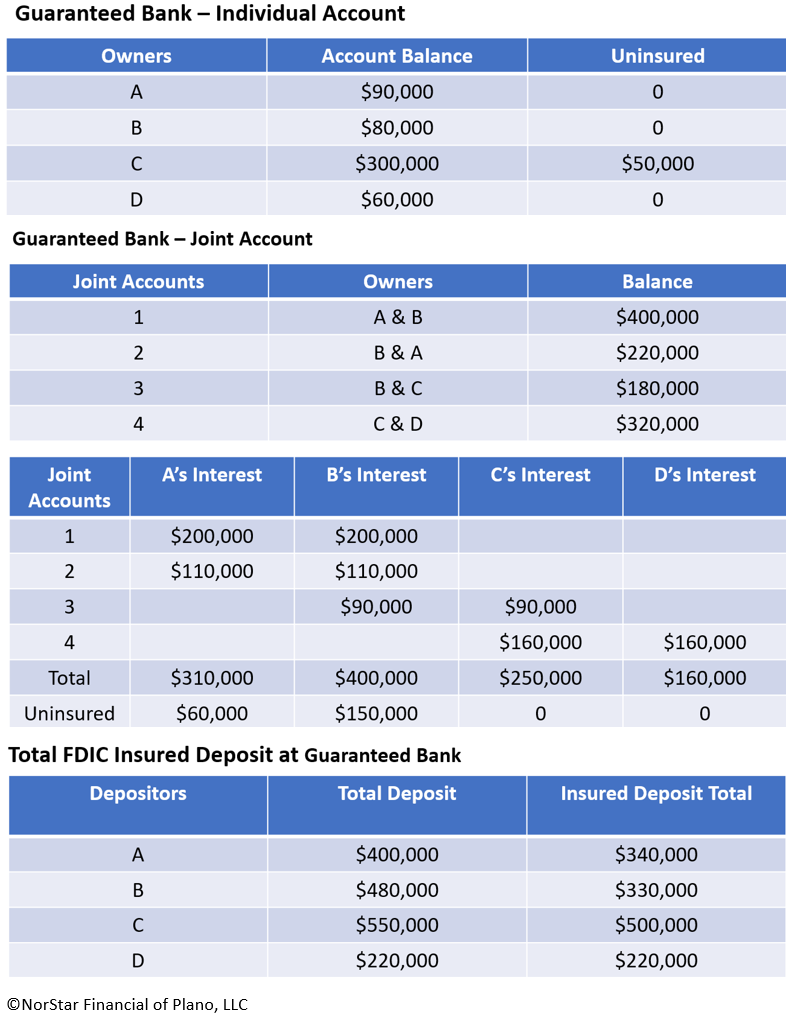
Naturally, you may wonder is my money safe in my bank?The Federal Deposit Insurance Corporation (FDIC) insures depositor accounts in banks and most types of nonbank thrift institutions up to $250,000. Deposits maintained in different categories of legal ownership, i.e. individual, joint account, irrevocable trust, and testamentary account are separately insured. As a result, a depositor can have more than $250,000 insurance coverage in a single institution. Here is how it works:

Likewise, the FDIC insures your deposits in each different institution in the same fashion as illustrated above. So, if you have $250,000 of deposit at each of four different banks, the FDIC insures a total of $1,000,000 of your deposits. As you can see, if you have a large sum of deposit exceeding $250,000, you need to either deposit the money into different types of accounts at the same bank, or spread the deposit among several banks.

Lost A Job? Changed Job? What You Need to Do Financially?

Facebooktwitterlinkedinmail

Have you recently lost your job? Or changed job within the past 12 months?

If so, don’t let these events disrupt your life and personal finance. Here are some important financial issues that you need to consider now:

If you lost your job, do you have sufficient funds to last you until you land a new job?

Do you have emergency fund in savings account or money market fund to cover 6 months of your normal expenses? What other income sources are available to you? Also, don’t forget to set aside fund to cover your 2022 income tax liability.  

If you changed job, has your income changed substantially?

If so, review and adjust your budget, tax projection and savings goals. Also, consider how the change in income will impact your ability to reach your previously set financial goals.

Do you have health insurance coverage?

If you changed job, are you covered by your new employer’s health insurance coverage? If not, coordinate insurance coverage so that there are no gaps in your health coverage.

If you lost a job, explore all health care options available to you. Depending on your current age, or the employment outlook, you may use your old employer’s COBRA for a short period of time to stay covered if you can find another job quickly or are eligible for Medicare soon.

Does your new employer offer Health Savings Account (HSA)?

If you have an HSA with your former employer, weigh the pros and cons of transferring the money in your old HSA into your new employer’s HSA.

Does your new employer offer Flexible Spending Account (FSA)?

If, before you changed job, you have contributed to your FSA with your former employer, you can still contribute to your new employer’s FSA as each FSA has its own annual limit.

Did you have employer sponsored life insurance and/or disability insurance?

If so, your employer sponsored life insurance and/or disability insurance will not follow you to your new job. You need to find out if your new employer offer employment related life and disability insurance, and whether the insurance benefits meet your needs.

Do you have a 401(k) plan with your former employer?

If so, you will need to decide whether to leave the money in the existing plan or roll them over. You need to weigh the pros and cons of both options.

Do you have stock options and/or deferred compensation arrangement with your former employer?

If so, review your stock option and/or deferred compensation plan documents to understand their vesting, exercising and distributing rules.

What’s next?

If you just got laid off, what your next step would be? It depends on your age and job skill sets. If you are a young professional, your next step might be looking for a new job or starting your own business. If you are an older professional you may be thinking about retirement or start a consulting business. Weigh your options and think them through.

If you are not sure you are making the right decisions, enlist a trusted financial professional to help you sort through your options. The financial decisions you make now could determine your financial destiny and affect the rest of your life.

How We Invest in This Volatile Market

Facebooktwitterlinkedinmail

As you have probably read in the news that the financial markets worldwide are pretty volatile recently. The S&P 500 index has lost more than 18% of its value year to date. To investors who want to seek safe shelters in the bond market, the sad news is that you most likely have lost over 9% year-to-date if you invest in a typical inter-medium term U.S. bond fund. Then, you may wonder what caused the volatility and how to invest in such a volatile market?

There are some unique factors combined to contribute to the market losses for investors:

  • Federal Reserve aggressively raising interest rates plus the reverse of its “QE” because of rising inflation in the U.S.
  • Supply chain disruptions due to COVID-19 lock downs
  • Rising commodity prices due to the uncertainties of the Russia – Ukraine War
  • Potential slowdown of the growth of world economy

How to invest in such an economic environment? Let me tell you how we help our clients invest in this kind of market.

We use an investment process that we call goal-driven, life-stage based investing.  First of all, investing is highly personal. That is why we design individual investment policy for each of our clients. First, we help clients define and prioritize their goals. Then we help them divide their goals into two big categories: short-term or long-term. And then, we further categorize these goals into “needs”, “wants” and “wishes”.  After we really know our clients’ goals and situations, we build each client’s strategic investment portfolios for long-term success. We select investment products to match their goals and life-stage they are in currently, taking into consideration their risk capacity and risk tolerance. Every year, our firm conducts macroeconomic conditions analysis as part of our evidence-based, data-backed investment research to design tactical investment strategies for the current market conditions.

During times like what we have recently been experiencing, we communicate with our clients, review with them their financial plans and explain to them the market impact on their plans. Knowing that they have sound financial plans in place, our clients are more confident that they will be able to make decisions rooted in reasons, not emotions.

Teen Traders, Good or Bad?

Facebooktwitterlinkedinmail

Recently, Fidelity announced that it is launching a Fidelity Youth Account for 13 to 17 years old.  The no-fee account allows teenagers to buy and sell stocks, exchange traded funds and Fidelity mutual funds. Fidelity pitches this new business as an education opportunity for teens to learn how to manage their money. So, should we cheer for the news that the brokerage house now allows teens to trade stocks? Not so fast.

First, since the start of pandemic last year, many of the new retail investors who entered the stock market are younger investors. Of the 4.1 million new accounts that Fidelity added in the first quarter of 2021, 1.6 million were opened by retail investors 35 and younger, an increase of more than 222% from a year prior, according to CNBC. Now, by allowing teens to trade stocks, is this another tactic for brokerage houses to attract money of even younger demographics?

Second, the name no-fee account is misleading. This could give teens the impression that trading is free. It could also encourage some investors to trade more. Numerous studies in the past have shown that frequent trading by timing the markets are detrimental to average investors’ long-term investment success.

Third, I am all for educating teens on sensible personal finance, but I think this time, it does the opposite of fostering good financial habit. According to a recent industry report that most of the Generation Z investors, people who were born between 1997 and 2015, get their investment advice from social media such as TikTok. Want to know what this means for investment world? Look no further than GameStop stock bubble earlier this year. This kind of investing habits are not unique to Gen Z investors. Think about how many of us who make investment decisions based on the “advice” or “tips” gotten from friends, coworkers, and/or online social media groups.

All in all, what I see from Fidelity’s latest venture is not a boon for teens and their families. If we really want to educate our teens on personal finance, teaching them the good habits of saving and budgeting, and understanding the impacts of personal debt are much more important than knowing how to trade stocks at this age.

What Role Does Your Financial Advisor Play in Estate Planning – Revisit

Facebooktwitterlinkedinmail

In 2019 I wrote an article with the title “What role does your financial advisor play in estate planning process?” Now I would like to revisit this topic given that Coronavirus pandemic has brought estate planning front and center to the minds of many people old and young.

In the past, when the words “estate planning” came up, most people would conjure up an image of an old, super wealthy man, pondering plans about who will get his enormous amount of fortune after he is gone. There are a couple of inaccuracies with this image. First of all, estate planning is not only about dealing with one’s monetary assets. Second, estate planning is critical and beneficial not just for older people.

So, what is estate planning? It involves using wills, trusts, insurance policies, and other legal documents to give instructions on what happens to your personal property, your tax, care of your young children and/or pets, and if any, your health care arrangements and final arrangements upon your death, etc.

Then, what role does a financial advisor play in her client’s estate planning process?

  • A financial advisor can help clients create plans that truly reflect their values, goals, and wishes with consideration of their overall financial situations.

Experienced financial advisors know that having estate planning documents do not always mean that a person’s estate planning goals are accomplished. Does the plan achieve what one wants to leave behind? A financial advisor knows a client and his/her family well and will take consideration of client’s overall situation in clarifying and prioritizing client’s goals and objectives before wills and trusts are drafted.

  • A financial advisor helps ensure continued success of client’s estate plan.

Estate planning is a dynamic process. Estate planning does not end after a client sign the estate planning documents. A financial advisor helps clients identify proper assets to fund their estate plan, designate and update beneficiary, review their situations annually and work closely with attorneys to update any changes in client’s family situations in the estate planning documents.

  • A financial advisor can reduce client’s mistakes and save them costs by increasing the chance that client’s estate plan will be carried out successfully.

An estate plan is not successful if client’s estate plan is not carried out as intended. Working with attorneys, a financial advisor can help ensure client’s assets are transferred properly by avoiding mistakes and minimizing administrative costs at death. Also, in some cases an advisor can help client’s intended beneficiaries locate and account for the assets they previously might not know of.

It is probably true that nobody wants to talk about his or her own death. But, let’s be honest, by avoiding and delaying this important planning, one simply does disservice to their loved ones. The pandemic taught us some valuable lessons. So, stop delay and start planning.   

“Pandemic Puppy” Deserves a Long-term Home

Facebooktwitterlinkedinmail

Since the pandemic began early last year, there were increasing numbers of Americans who adopted so called “pandemic puppies”. These fur babies brought joys and companionship to many families who were confined to their homes due to governments’ lock down orders. Sadly, in a recent article USA Today reported that those dogs are being returned to shelters all cross the country.

I do not know all the reasons behind the surging numbers of returns of these dogs. But, I venture to say that if you have adopted puppies during the pandemic, with a little planning on your part things can work out pretty nicely between your puppies and you. The things you need to consider now that life has been gradually returning to pre-pandemic ways are how your new routines affect your dog and what the long-term costs of having a dog are. I will offer some tips on the financial part while leave it to you to figure out how to make your new routines work out for you and your dog.

 Depending on the breed of the dog, some dog could incur a large amount of medical bills down the road. One way to mitigate the financial burden is to buy pet insurance. Do a cost/benefit analysis. Does it make sense to buy pet health insurance in your individual situation? Many pet insurances only cover cats and dogs, but a couple of insurers will also cover birds and reptiles. Before you purchase health insurance for your dog, be sure you understand what covered and excluded conditions are and how you file an insurance claim. Some plans do not cover routine office visits. Many pet insurance companies put their sample insurance policies on their websites. Locate these policies and read them carefully.

Our pets bring us joys and companionship, but they also depend on us for continuous care. How to provide such care in case we are not able to? The pandemic taught us how important it is for us to have some kind of estate plan in place. Fortunately, pet trust can be a valuable tool for pet owners to do so. So far, all 50 states of the U.S have passed laws allowing pet owners to set up trusts for their companion pets. While considering setting up a trust for your dog, it is a good practice to designate different parties as caregiver of your dog and trustee that administers the funds in the trust for your four-legged companion respectively.

Alternatively, pet owners can opt for a pet protection agreement, which is simpler than setting up pet trusts, to protect their pet. With a pet protection agreement, pet owners can name their pets’ guardians, leaving funds, and providing instructions for how to care for your pets when you are not around.

Hopefully, with a bit of creativity and some planning by you, the “pandemic puppy” will be your companion for many, many years to come.