
The Hidden Danger of Investment Concentration

Facebooktwitterlinkedinmail

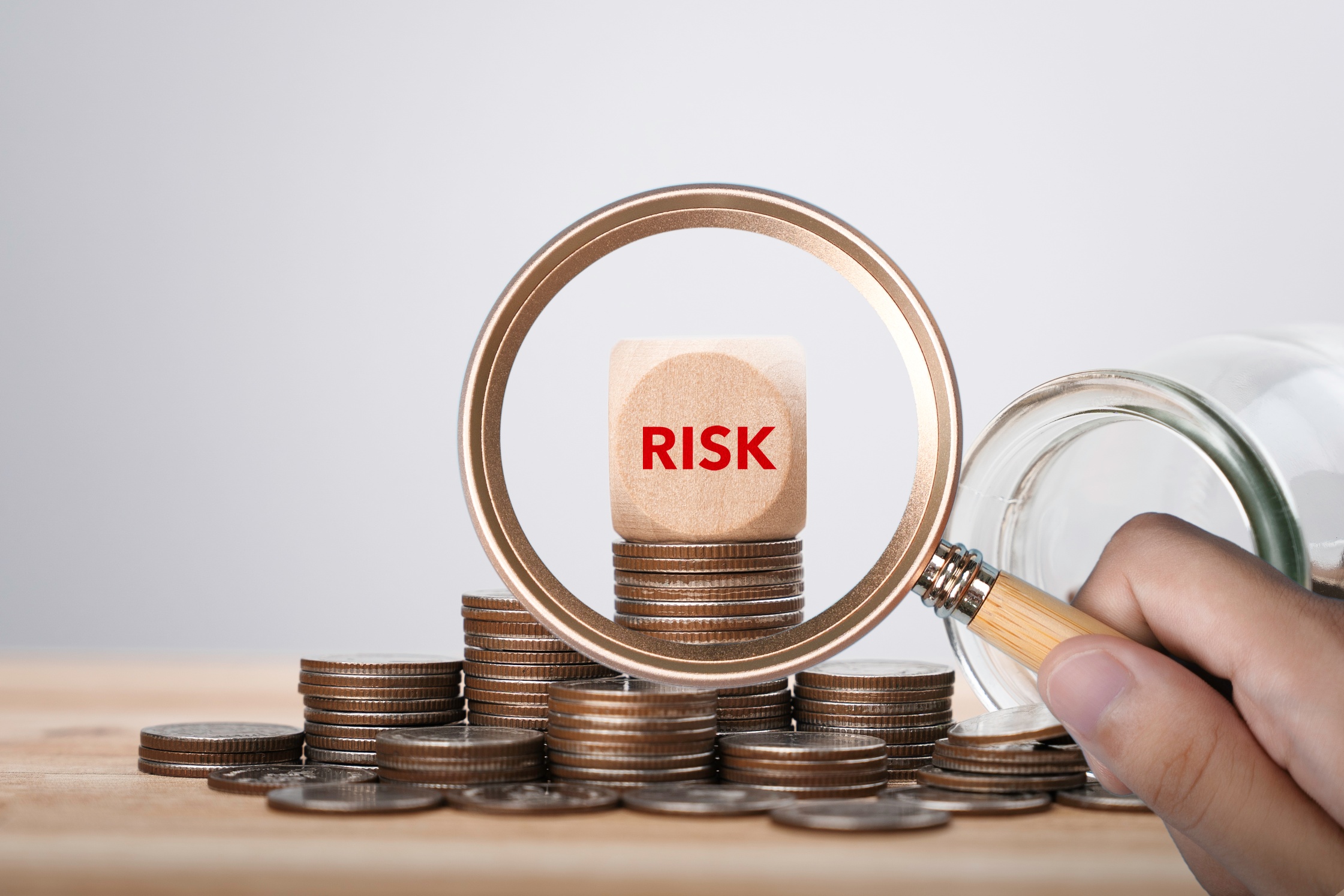
One of the most common investment risks for successful individuals and families is not necessarily owning the “wrong” investment. It is owning too much of one investment—or having too much of your financial future depend on one source of wealth.

Concentration can happen gradually. A company employee accumulates stock through RSUs, stock options, or an employee stock purchase plan. A business owner has most of his or her net worth tied to the company. A successful real estate investor purchases several rental properties, but all of them are located in the same geographic area.

If something goes wrong with that one company, one industry, one real estate market, or one economic region, a large portion of your wealth can be affected at the same time.

Equity Compensation Can Create a False Sense of Wealth

Equity awards, such as company stock options, employee stock purchases, can be extremely valuable, but they can also create a psychological challenge.

When a company’s stock has performed exceptionally well, employees may become reluctant to sell because they believe:

“I’ve worked hard for these shares, and I don’t want to give up the upside.”

That instinct is understandable. But once an award has vested, the question changes. You are no longer deciding whether you want to receive the stock. You are deciding whether, if you had the cash today, you would voluntarily use it to purchase that same amount of your employer’s stock.

That is a very different question. If the answer is no, it may be worth examining whether continuing to hold the shares is consistent with your overall financial plan.

The goal is not necessarily to sell everything immediately. The goal is to determine how much company stock is appropriate relative to your total financial picture, risk tolerance, future compensation, tax situation, and financial goals.

Real Estate Can Create Concentration Risk Too

Real estate is often viewed as a diversification strategy because it is different from stocks and bonds. But owning real estate does not automatically mean that your wealth is diversified.

Consider a family that owns:

  • Their primary residence
  • Three rental properties
  • A vacation property
  • An office or commercial property

If all of those properties are located within the same metropolitan area, the family’s real estate portfolio may be highly concentrated geographically.

Suppose an investor owns $3 million of rental real estate in one metropolitan area. The investor might consider the portfolio diversified because it consists of five different properties. But all five properties may depend on the same local economy:

A major employer leaving the area could affect employment, housing demand, rents and property values.

A significant change in local regulations could affect landlords.

A prolonged period of population decline could weaken demand.

A natural disaster could affect multiple properties simultaneously.

Five properties do not necessarily mean five independent investments. The properties may have different addresses, different tenants, and different purposes. But they can still be exposed to many of the same economic forces.

Even changes in property taxes, insurance costs, zoning rules, infrastructure, or local economic conditions can affect several properties at once.

If a significant portion of your wealth comes from employer stock, equity compensation, a privately owned business, or real estate concentrated in one geographic area, it may be worthwhile to look at your holdings as a single integrated balance sheet rather than evaluating each investment separately.

The important question is not simply, “Is this a good investment?”

It is:

“How much of my financial future depends on this investment continuing to work?”

Bitcoin, an Investment Asset Class?

Facebooktwitterlinkedinmail

Almost every great product or commercial idea has a great story behind it. Take the famous perfume, Chanel No.5, for example. The story goes like this: During the late summer of 1920 Coco Chanel commissioned perfumer Ernest Beaux to make a perfume for modern women. It is said that Beaux’s assistant accidentally added a dose of aldehyde in a quantity never used before to the concoction for the perfume sample they named No.5. And among all the 10 samples Ernest Beaux came up with for Chanel, She picked No. 5. The perfume is a huge success.

So, what does the story of a legendary perfume have to do with Bitcoin? It’s because Bitcoin, too, has a fascinating story behind its origin. But, let’s first look at what this thing called Bitcoin is.

A Basic Primer on Bitcoin

What is Bitcoin? In short, Bitcoin is a digital currency. Unlike government issued currencies, there is no one central administrator such as the Fed to regulate it. It is decentralized. It can be sent from user to user on the peer-to-peer online network without the need for traditional financial intermediaries such as banks. A distributed, public ledger called block is used to record and store every Bitcoin transaction. Similar to ledgers used by accountants for bookkeeping, each electronic ledger-block contains a set of transaction history of Bitcoins in a certain time period. Each block has certain storage capacities. Once filled, these blocks are “linked” or “chained” to each other because each new block also stores the hash of the previous block’s header, thus chaining the blocks together. Hence, this linked chain of blocks gives the name “blockchain”. Anybody can look up Bitcoin transactions and download a copy of the blockchain into their computers. But, the real identities of the parties to each Bitcoin transaction are not necessarily linked to that transaction. In this sense, Bitcoin is considered anonymous.

What does it mean by “owning Bitcoins?” Owning Bitcoins is very different from traditional ways of having money bills in your wallets or putting money in your bank accounts. In the world of Bitcoin, you do not physically hold the currency or have an account with Bitcoin balance. Nor can you store Bitcoins in your computer like a file such as MP3. According to Coinbase, an online platform for buying, selling, transferring, and storing digital currency, “owning bitcoins” actually means owning an online Bitcoin address, which has a balance recorded on the blockchain. Owning this bitcoin address gives you the control of the associated Private Key, a secret number that allows Bitcoin to be unlocked and sent, and therefore allows the signing of transactions. Put it simply, to make a Bitcoin transaction, the sender just asks for the receiver’s Bitcoin address, and then generates some locking scripts using the receiver’s Bitcoin address so that only the receiver can create unlocking scripts using his or her private key associated with that address.

Then, where did Bitcoins come from? Or, who issues Bitcoins, you may wonder. The closest example to how Bitcoins come from is probably gold mining. The gold miners dug the gold out of the ground for circulation. Nobody issues gold. Similarly, there is no such central authority like Federal Reserve to issue Bitcoins. Bitcoins are created by Bitcoin protocols, a rule of systems determining how many of and who can create them. Bitcoins are mined and brought to circulation by Bitcoin miners. Unlike the gold miners in the 19th century California gold rush, who used tools like pickaxe and pan, the Bitcoin miners use powerful and specialized computers to solve complex computational math problems on the Bitcoin network. By doing this, Bitcoin miners verify the authentication of each Bitcoin transaction. Once a miner has verified 1 MB (megabyte) worth of transactions, also known as a “block,” he or she is rewarded with a number of newly-created Bitcoins. Therefore, you can say that Bitcoins are created out of thin air. It is said that there is a total of twenty one millions of Bitcoins. So far, eighteen millions of them have been “mined.”

A Brief History of Bitcoin

It started with its enigmatic inventor, a Japanese called Satoshi Nakamoto who published a white paper called “Bitcoin: A Peer-to-Peer Electronic Cash System.” right after the 2008 financial crisis. In these papers Satoshi Nakamoto envisioned a kind of digital currency that can be sent from user to user on the peer-to-peer online network without the need for traditional financial intermediaries. On Jan. 3, 2009, the first block, called the genesis block, was mined; the first test transaction took place about one week later, and the first economic transaction involving Bitcoins took place when a Florida man negotiated to have two Papa John’s pizzas delivered for 10,000 Bitcoins on May 22, 2010, according to an article by Coryanne Hicks published on US News and World Report’s website.

The first exchange platform on which Bitcoins were traded is a now defunct website called bitcoinmarket.com, which went live on March 17, 2010 (source: bitcoin.com). Nowadays Bitcoins are traded in multiple exchanges such as Coinbase and Binance among others.

From its humble beginning of trading one Bitcoin for 5 cents to the high of $19497.40 in 2017, then tumbling down to a trough of $3232.76 and back to present day of roughly $55979.20 as I am writing this article, the price history of Bitcoin is a volatile one.

Bitcoin as an Investment Asset

From an obscure alternative financial concept to the mainstream investment world, Bitcoin has been generating buzzes as well as controversies among investment professionals along the way. There are two camps of opinions on whether Bitcoin is an investment asset or not. The first camp firmly believes that Bitcoin is a new asset class. This camp constitutes mostly of Bitcoin miners, traders and investors. In an article written for Forbes, journalist Laura Shin summarized four reasons why she thinks Bitcoin is a new asset class: investability of Bitcoin, its economic value, its correlation of returns from other investment assets, and its risk-return profile. The other camp who does not think Bitcoin is an asset class, or at least not yet, including Goldman Sachs. Goldman Sachs’ rationale includes Bitcoin’s high volatility, its inability of generating cash flow like bonds, and its inability of generating earnings through exposure to global economic growth. Recently, current Treasury Secretary Janet Yellen has joined the Bitcoin skeptics and warned that Bitcoin is “an extremely inefficient way” in conducting monetary transactions. 

No matter what your take on these two opposing views, first of all we have to understand how Bitcoin is valued. Is it worth whatever price you happen to see on the financial market on that day? Like many other goods the value of Bitcoin follows an economic principle called the “law of supply and demand”. Essentially, your Bitcoin could be worth $50,000 or 5 cents depending on the price people is willing to pay to have it. I caution anyone who is eager to jump onto the Bitcoin bandwagon. You need to thoroughly understand what investing in Bitcoin means, how this might fit in your investment portfolio and how it can benefit your individual situations. Otherwise, it could cost you dearly.